Author Archives: jwiskow

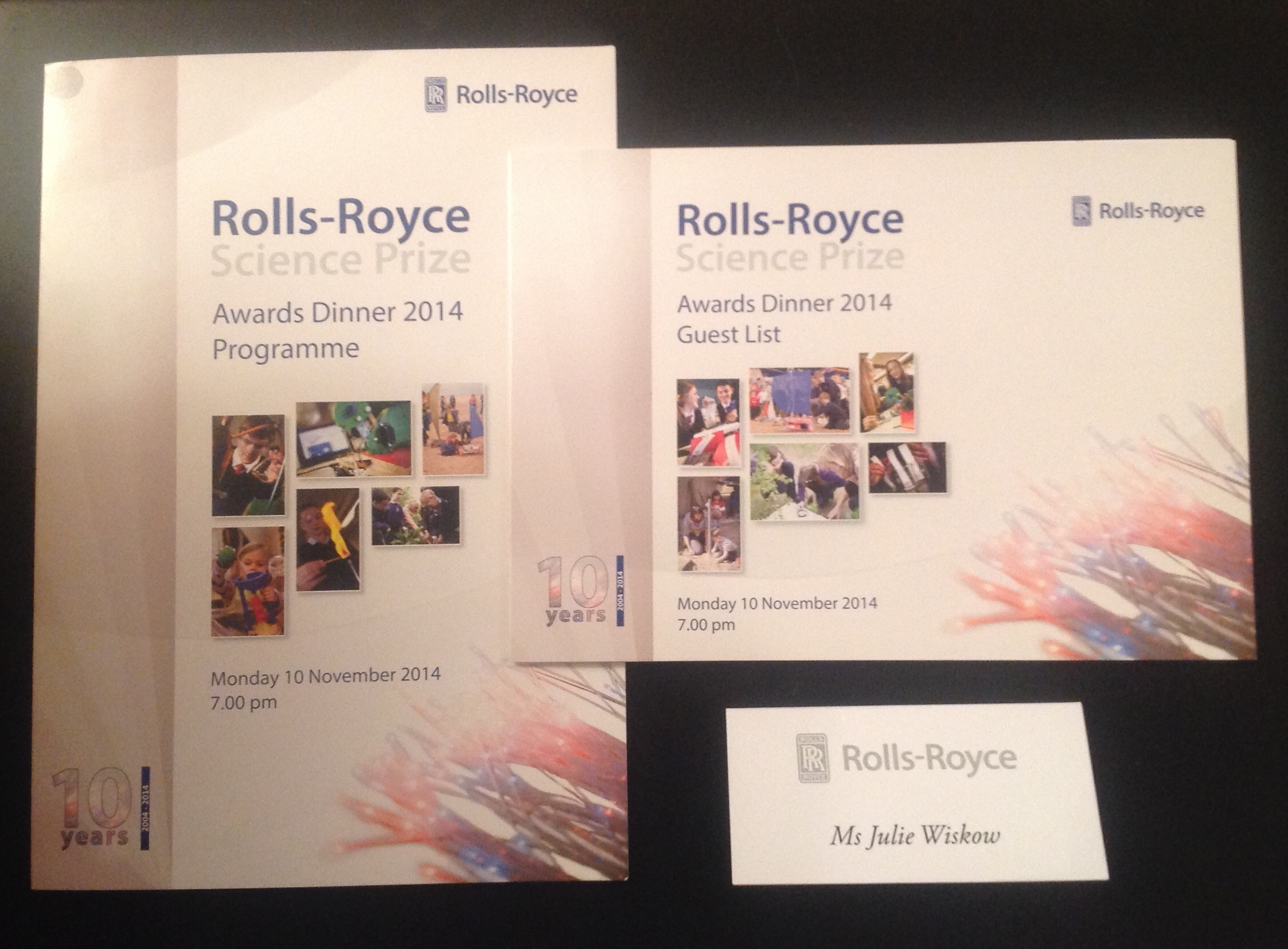
The Rolls-Royce Awards Dinner

After a three hour coach journey from Derby, we arrived at the Millennium Gloucester Hotel in Kensington at just after 4pm. This gave us a couple of hours to relax and prepare ourselves for the big night ahead. My head teacher had travelled down separately, as only the team leads of the new finalists had been invited to the Derby events.

At 6pm sharp, we all gathered in the hotel foyer, keen to make our way to our prestigious dinner venue. There was a great atmosphere. Everyone looked very smart in their suits, lapels adorned with single red poppies, a poignant reminder of all the brave soldiers who lost their lives in the World Wars – still remembered.

And, what an incredible place it was to spend the evening – the obvious choice for a Science Award. The guest list was equally impressive. I felt quite honoured to be included amongst such eminent people and wondered whether I should have produced as list of intelligent questions to ask. It felt quite surreal eating my deconstructed prawn cocktail beneath the giant exhibits in the Making the Modern World Gallery, which showcases 150 of the most significant items from the Science Museum’s collections, including Stephenson’s original Rocket locomotive.

Before dinner we were treated to a series of short videos celebrating this year’s finalist projects. Of course, next year, it will be our team sitting there gauging the reaction of the crowd and wondering whether we have won the top prize. Although, winning didn’t seem to be the most important factor; it was all about celebrating the outstanding practice of teachers and the impact that their work has on children and their understanding of science. There was much appreciation from all quarters. Every speaker thanked the participants for their enthusiasm for and commitment to science. I felt really proud on behalf of our school to be included. And, we should feel proud of ourselves, as over 2,000 schools submit entries for this prize and we are one of only 9 finalists this year. Well done, Rode Heath.

After dinner, the ceremonies began with keynote speaker, Richard Noble, who spoke passionately about his exciting BloodHound SSC venture, now on track for a 2015 record attempt. Imagine a car aiming to travel at 1,000 miles per hour. Of course, we were lucky enough to take some of our junior children last year to Reaseheath college to see the replica Bloodhound car and take part in various STEM activities, so it was particularly interesting to see Richard in person.

Sir Tim Smith KBE, founding director of the Eden project, who has been involved with the RR Science Prize since its inception 10 years ago, made a brief, but very amusing speech, before awarding the Eden Award to St Mun’s Primary School for their ‘If You Go Down in the Woods Today’ project. Then it was up to the Chief Executive, John Rishton, to announce the runner up and prize winner.

The runner up was Chesterton Community College for their ‘Introducing Engineering via Animatronics’ project, but the overall prize went to Kate Greenway Nursery School & Children’s Centre for their ‘Playful Science for Everyone’. This was an interesting project as it involved children as young as 6 months old. Its aim was to provide very early science experiences to children and their families through a range of exploratory activities. I strongly believe that in order to generate future engineers, we need to capture and nurture children’s interest in all things scientific at a very early age. I think we are going to achieve this with our Out of This World project.

Certainly we are beginning to develop an interest in science across a wide audience, which includes both children and their parents. Our relationship with MMU will encourage our children even further by providing them with real experiences of what it is like to study science at university.

I can’t wait for our visit to MMU in January next year. In the meantime, we have a number of exciting events planned to inspire the children: Intergalactic pass the parcel; a Mars soil investigation and programming rovers using Raspberry Pi technology. We owe a massive thank you to all our external supporters who are helping us to achieve our goals.

And, of course, tomorrow we have one of the most exciting events in space history . . . the landing of the probe Philae on 67P. How can anyone fail to be awe-inspired by space?
Menus

Visit to Rolls-Royce Derby

What an amazing two days I have just had. Being involved in the Rolls-Royce Science Prize has certainly been a most rewarding experience so far. I recommend that all schools at least investigate applying – if nothing else, it encourages you look at the impact that science is currently having in your school and you may even be awarded some money to help with your plans.

Anyway, back to the weekend which saw me catching a train to Derby on Sunday afternoon – eager to reach the hotel and meet my fellow competitors. Conveniently, the Pentahotel was within easy walking distance of the station, and after asking directions, I soon arrived. First impressions were favourable; although, I have to say the ambience was very reminiscent of a night-club – lots of subdued purple lighting. At 7pm everyone met in the foyer and I recognised Henry, our mentor, and several people from the project videos I had watched. Having made a few introductions, we then made our way to the designated restaurant to be greeted by Rani.

The ensuing meal was absolutely excellent, with wine and conversation flowing freely. I must admit that, having checked the wine bar out on the Internet, I was initially not sure about the predominance of black and red as a colour scheme. I now however realise the logic behind the choice – it is almost impossible to detect spillages on black table cloths. And, I have to say that during the course of the night, on our table alone, there were numerous incidents, including a bottle of red wine at one point. I think one of the main problems was the table mats, carefully concealed underneath the cloth, which made it very difficult to judge where to put your glass down safely, particularly as the evening progressed.

At one point, we were entertained by a magician, who performed a number of very clever tricks. Despite watching intently for any sleight of hand, I am still mystified as to how he manipulated the cards and managed to change a £10 note into a dollar. He was rather more successful than the poor singer, who seemed to get louder and louder in a vain attempt to be heard over the ever increasing background chatter. Despite the noise level (which was actually quite deafening at times) this was a great opportunity to get to know people and find out about their projects, all of which seemed very credible. As well as finalists, there were a number of Rolls-Royce employees on our table, many of whom were mentors. It was very interesting to listen to them talk about their role within the company – you got the distinct impression that they really enjoyed their jobs and that Rolls-Royce was a good place to work and valued its employees. Indeed, a very nice touch at the end of the evening was when each school was presented with a framed certificate celebrating the excellence of its science teaching.

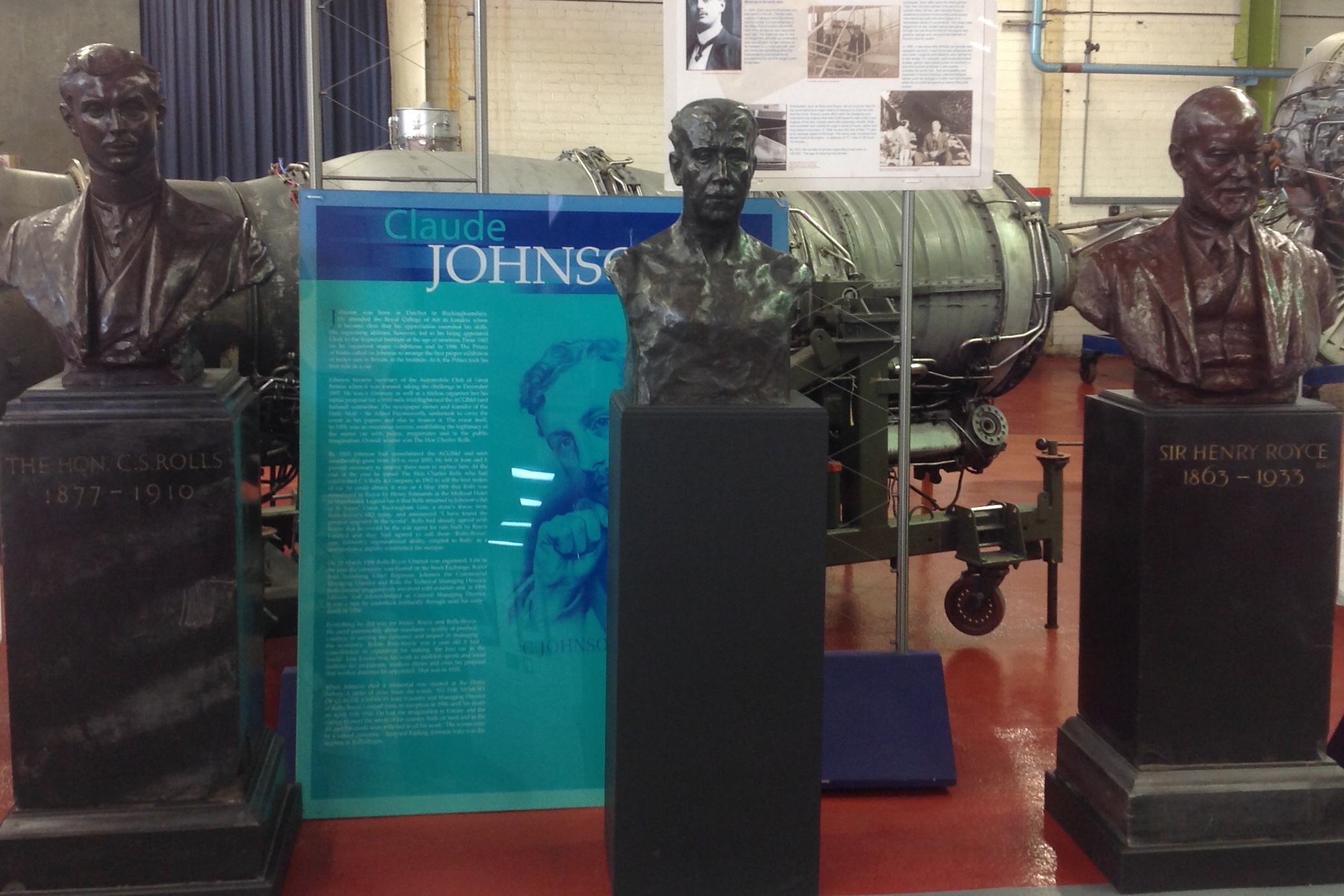
Next morning, we were driven to the Learning & Development centre where, following a brief talk, we embarked upon a tour of the Heritage Trust Centre to learn about the history of Rolls & Royce and the development of the various engines. It was an extremely interesting experience made all the more enjoyable by the enthusiasm of our guides. I never appreciated that Charles Rolls had been killed so early on in the partnership. I wonder how things would have played out had he survived.

The next stop on our tour was to view the manufacturing of critical rotatives. Once inside the building, we had to put on rubber overshoes and wear safety glasses before being allowed onto the vast shop floor. Although the visit was brief, it became very clear that the overriding focus is on the production of the highest quality products, which are tested and retested at every stage to ensure absolute consistency and reliability. Although we were not allowed to take any photographs, an interesting fact that I learned was that the Trent 900 engines, which power the Airbus A380, draw in enough air to inflate 72,000 party balloons in one second . . . that’s a lot of balloons.

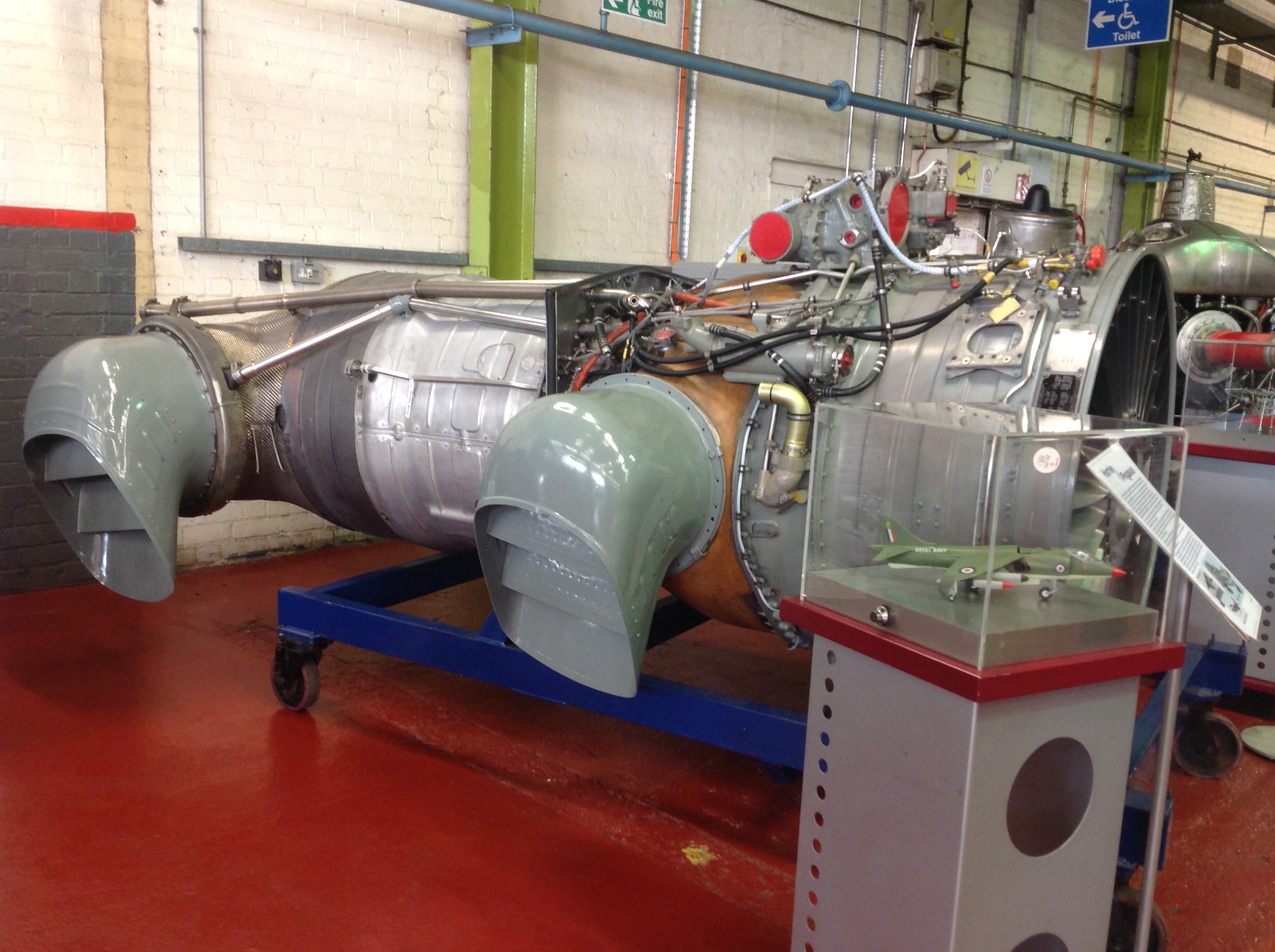
Engine to power a Harrier Jump Jet

Engine to power a Harrier Jump Jet

Charles Rolls, Claude Johnson & Henry Royce

Charles Rolls, Claude Johnson & Henry Royce

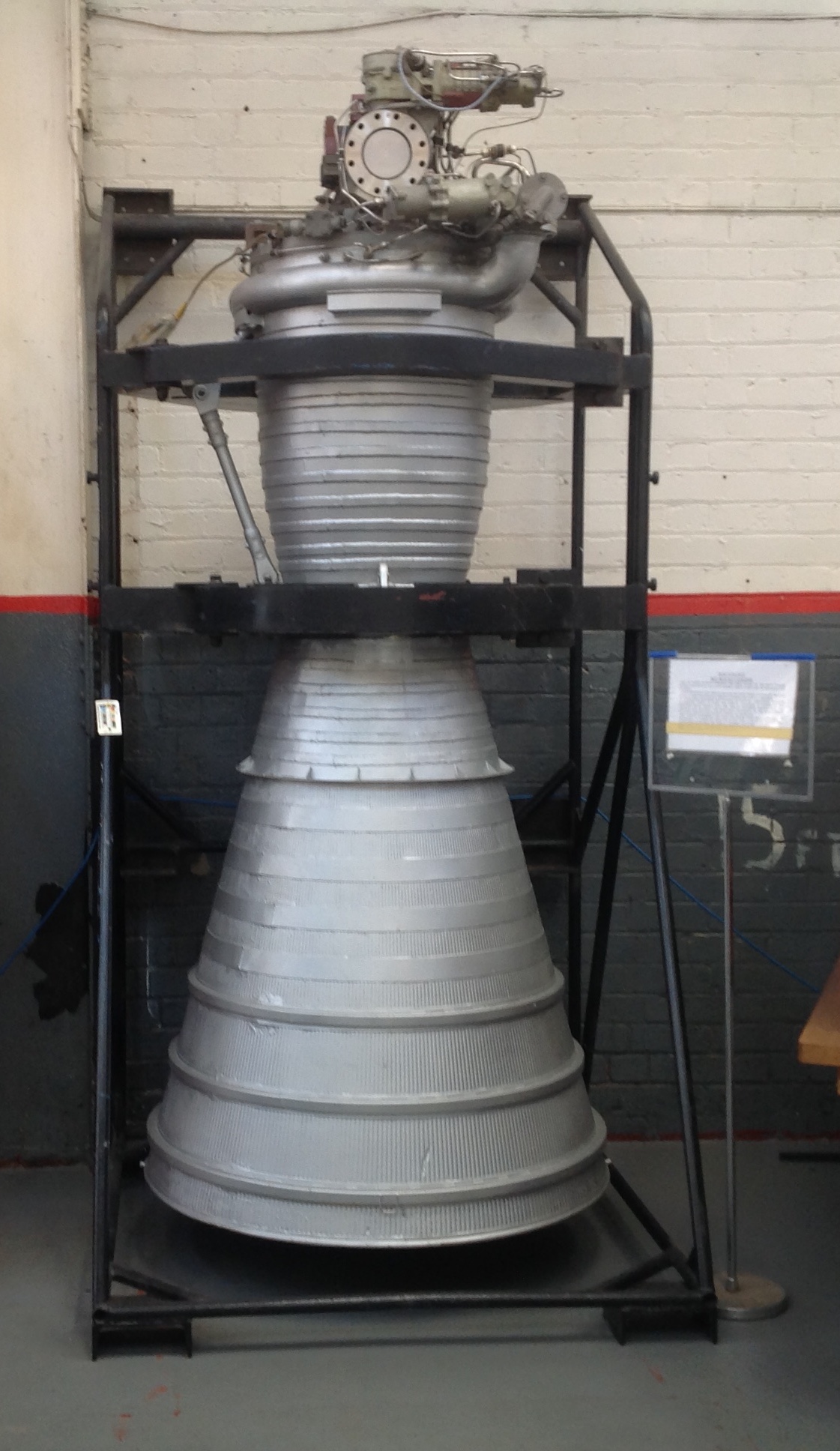
Rocket engine

A rocket engine.

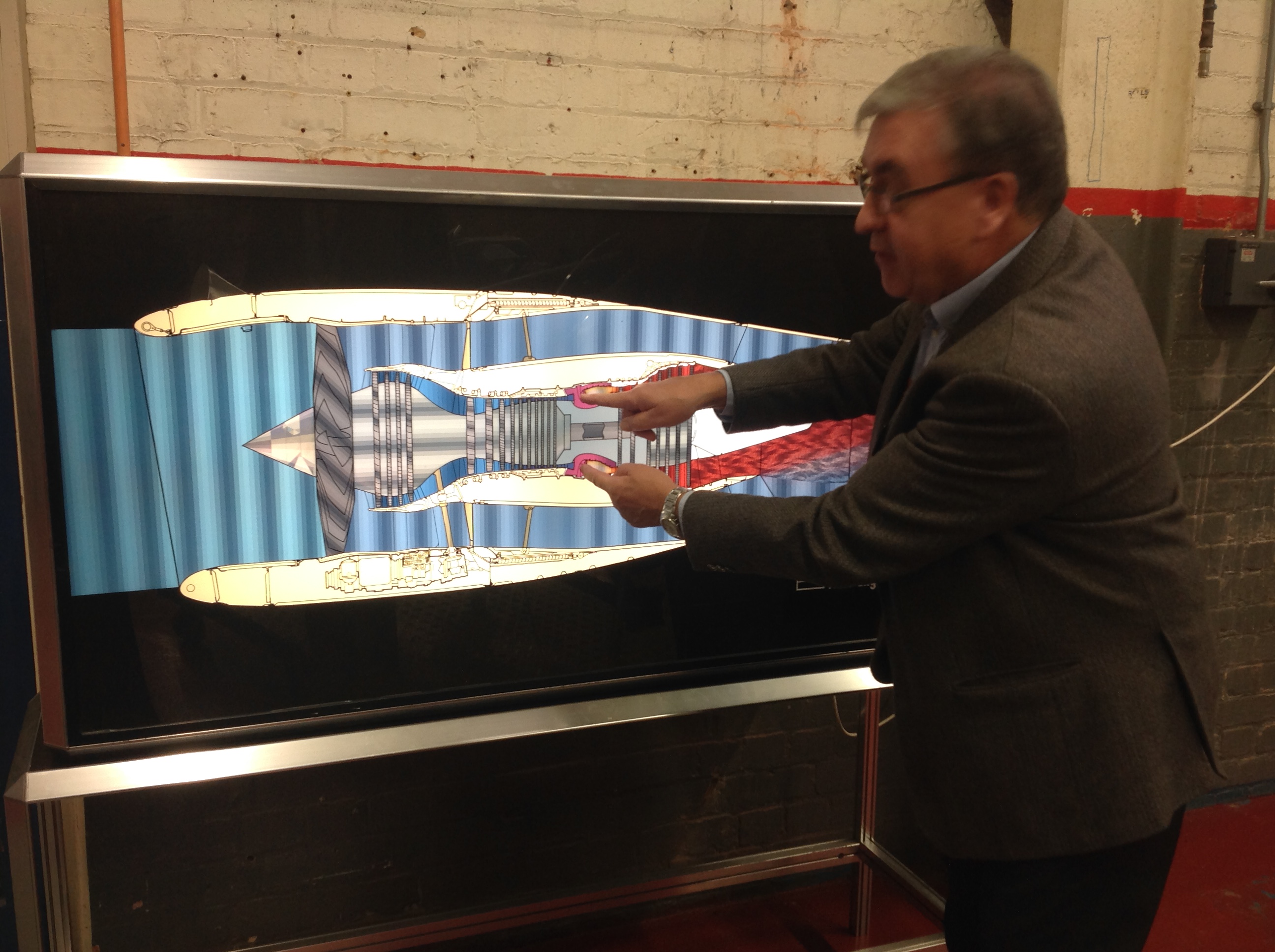
Explaining how an internal combustion engine works - suck, squeeze, bang and blow.

Explaining how an internal combustion engine works – suck, squeeze, bang and blow.

Half Term

Quite a short blog this week, as it’s been half-term, although school work has inevitably gone on. The main thrust was to put the 5 minute video together for the Rolls-Royce competition. Fortunately, I had plenty of footage to work with – it was deciding what to include that was the problem. Having reviewed the clips, I think that next time, if we are going to read from pieces of paper, we need to focus more on where we hold our scripts. I definitely don’t look as if I am looking at the camera – in fact, it’s quite disturbing to watch. Good job I’m not on camera for long.

To be fair though, I have started to look more closely at videos on YouTube and quite a few of the ‘actors’ seem to have wandering eyes. Perhaps we should invest in an autocue for next time!

To produce the final edit I used iMovie on my Apple MacBook Pro computer and I am pleased with the results. I think it tells a good story and puts across our message quite succinctly. Let’s hope Rolls-Royce think so. I have included all the raw footage on a DVD, as well as my film, for their media department to be creative with.

The other important event of the week was a visit to Daresbury Laboratory. I had been invited earlier in the term by Wendy Cotterill to an access afternoon and I took my colleague, Sharron Ross, with me. I thought it would provide a good opportunity to make some contacts and try and establish a relationship with their education team.

The afternoon was primarily for employees and their children and it started with an excellent hour long talk by Dr Phil Manning entitled ‘working with Dinosaurs’. He was extremely entertaining and both Sharron and I learned a great deal. I particularly liked his urging of children to always work at the ‘edge of their understanding’ – my philosophy entirely.

Following this, we were able to observe children taking part in a number of space-related activities, including creating a 3D Philae lander; building a comet and producing some effective deep space galaxy art – all of which Sharron is going to try out with KS1. Of particular interest was a demonstration of how to make a comet out of sand, soil, tabasco and dry ice! I think we are going to attempt this in an assembly to mark the launching of the Philae probe on 12th November – providing we can obtain the ingredients, of course!

Over the course of the afternoon, we met some very interesting and potentially useful contacts, one of whom was Louise Dennis, a STEM ambassador from Liverpool University. She was demonstrating how to program robots using a Raspberry Pi – perfect for our Year 6 class.

Wendy introduced us to her new boss, Phill Day, who seemed very interested in what we were doing. I am hoping that we will be able to develop a long term relationship with STFC and become one of their key primary partners – altogether a very successful day.

Not long now until the Rolls-Royce event at the Science Museum. I am really looking forward to meeting the other candidates . . .

Making 3D lander

Making 3D lander

DIY comet

DIY comet

Galaxy pictures

Galaxy pictures


Focus on Filming

Well, just over a week later and we already have a new website and 77 followers on our @OotW_UK Twitter site. Well done Mrs Pheasey for generating so much interest on Twitter – some of our followers seem quite distinguished too! We even had a tweet from Star Wars UK! Still no response from Brian Cox though – obviously a different strategy is required. Thanks must also go to our Rolls-Royce mentor, Henry, who has helped me with setting up the website.

Talking of Rolls-Royce, this week at school we have been working hard at collecting footage for our five minute video, which I am due to take to Derby on 9th November. Friday was an INSET day and the turn of the team members to say their piece in front of the camera. Quite a daunting task, despite the fact that we perform in front of an audience every day.

After we had blown up our script to a sufficient font size (it’s amazing how bad some of our eyesight seems to be!), we then had to decide where best to hold the paper so that it was as close to the camera as possible, but not obscuring the lens. The idea was so that we could look at the camera lens without moving our eyes about too much. Not as easy as you might think. Anyway, Mr Randall elected to go first and did his piece in his classroom, which was handy as we were able to make use of the whiteboard to display his words. No excuses for him then.

Several takes later, we were onto Mr Leech, who had two sections to film: one in his office, to introduce the school, and another sat at the 3d printer, talking about his role in the project. I am not sure whether having the 3d printer running at this point was a good idea, as it made a good deal of noise – let’s just hope it doesn’t obscure his words, as I’m sure he won’t want to do it again.

The next section of filming was done with different aspects of our ISS in the background: Ms Sinclair, our maths lead was first – after changing into her NASA T-shirt) and then Mrs Ross, who is responsible for the IT element. A number of takes later (mainly because Mrs Ross couldn’t contain her laughter!) it was my turn. Fortunately, I managed it in one take, although I haven’t looked at the footage yet.

Altogether, it was a very enjoyable experience. We pulled together as a team and were greatly amused by each other’s quirky behaviour when in front of a lens – maybe I’ll put some outtakes together. A lot of thought had gone into what we were going to say and we all seemed to be relaying the same message: space is an excellent vehicle with which to inspire children, as they are quickly captivated and motivated to take responsibility for their own learning.

Space Assembly and first meeting with our Rolls-Royce mentor

Following World Space Week, I thought it would be a good idea for all the classes to share the activities they have been carrying out towards our own space project.

I tasked the Year 5s with producing a PowerPoint to introduce the assembly, suggesting that they explain the rationale behind WSW and then talked about what they had been doing to celebrate the largest space event on Earth. Helena took up the mantle and did a fantastic job. I had coached very briefly in the art of presenting and she had listened well: no reading off slides and just using the short bullet points she had made to remind her of what she wanted to say.

Year 5 showed a selection of the mini International Space Stations they had made last week with Mrs Malam and shared some facts that they had learned. Frankie read her excellent poem describing what it is like to take off in the Soyuz rocket and Izzy explained how she had made her 3d constellation of the Plough with Mrs Hesketh.

Year 6 followed with some inspired poetry and an informative biography of Tim Peake, whilst Oliver baffled everyone with his PowerPoint on solar energy. You will be able to read the poetry on the Out of This World website shortly. Year 4 demonstrated how maths is related to our space project by demonstrating, using a pie-chart, how an astronaut’s day on the ISS is divided up.

The Year 3 children were very entertaining. They had been investigating spacecraft and had built their own shock absorbing system to protect two marshmallow astronauts when they landed. The assembly was a chance for them to test their designs in front of a large audience. For the design to be successful, it had to prevent the astronauts from bouncing out of the cup and not tip over. After a countdown from Mr Randall all the landers were dropped from about two feet. Whilst a couple tipped over and the astronauts fell out, the majority allowed their astronauts to land gently. Well done Year 3.

Key Stage 1 were not to be outdone and again their work had a predominantly maths theme with Years 2 and 1 using tangrams to produce a picture of a rocket. Year 2 also produced some excellent shape poetry and acrostics. Finally, Reception showed us how they had used rockets to write numbers and count stars. It was an excellent set of work by all and demonstrated how space could be used successfully throughout the curriculum. Judging by the quality of the work, the children were also really engaging with what they were doing.

On Tuesday we met our Rolls-Royce mentor, Henry Simkin, for the first time. I spent 45 minutes giving him an overview of our project and showing how we have already spent our money in purchasing the 3d technology. He seemed to be suitably impressed by what we had achieved in a relatively short time and how organised we were. During a meeting with the team, he made some very useful suggestions, which has resulted in us setting up a new Twitter account @OofW_UK – thanks to Mrs Pheasey – to promote ourselves more widely and transferring our blog to WordPress. We now have the beginnings of a website devoted to our project: https://outofthisworldproject.com/

Later on in the week, having retweeted some 300 tweets, we received a #ff tweet from Libby Jackson, which I believe means that we are worth following. I wonder how many followers we will have by the end of next week . . .

Libby Jackson tweet

Reception

World Space Week, 3d printing and more

I can tell that the teachers have been bitten by the ‘space bug’ as all of our Open Mornings this week have been dominated by space activities. It was delightful to see the range of tasks that were going on in each class and the enthusiastic comments from the parents. Not only that, but the week seems to have coincided with World Space Week, which has been an added bonus.

I must mention our TAs too who have worked tirelessly this week (even more than usual) to make sure the mornings were a success. Not only have they prepared material, but actually taken the responsibility of teaching their own groups – three sessions in 90 minutes – quite a feat for all.

In Year 5, Mrs Malam recreated the International Space Station using an assortment of tin cans, Pringles tubes and tin foil. The result (although not absolutely accurate according to one helpful Tweeter!) was nothing short of magnificent and is now suspended from the ceiling outside our walk-in space station. And, I have to say, as the 90 minutes passed on Tuesday morning, the results from her efficient production line just kept getting better and better.

At the other end of the classroom, in the shared space, Mrs Hesketh was expertly instructing the children and their parents as to the complexities of constellations whilst using measuring skills to construct a 3D model of the Plough – all excellent learning through space.

Throughout the week it was evident that the topic of Space can be taught through all areas of the curriculum. There was an abundance of inspired poetry; art from Reception; rocket tangrams from Year 3; DT from Year 4 and numerous science experiments. I was particularly impressed by Mr Randall’s attempt to build a shock-absorbing system to protect two astronauts when they landed on the moon. The “astronauts” were marshmallows and the springs to absorb the shock were pieces of folded card. I can’t wait to learn how the ‘astronauts’ got on when they were dropped from a height of 2 metres – let’s hope not too many of them bounced out. I think the inimitable Miss Moss took a video on her iPad, so maybe we will be able to watch it in Monday’s sharing assembly.

And, if you think that was impressive, this week also heralded the start of our 3D printing adventure. Fortunately, I have a very technical husband, who as well as being interested and conversant in 3D printing, was able to help us. This turned out to be very timely, as setting the printers up proved to be more difficult than we expected – mainly because of problems caused by our proxy server, which prevented us connecting to the Internet from the MakerBot software.

The printers themselves, MakerBot Minis, are excellent and much easier to assemble than previous versions. The model we chose has been simplified and requires no bed levelling, which means that printing is more instant. Eventually, we managed to solve our issues and set our first item printing, leaving it to complete by itself.

Actually, a clever feature of these printers is an inbuilt camera which allows you to monitor your printing remotely. It’s not perfect, but you can seem whether it’s working or not.

The arrival of this technology was almost perfectly timed, as we have been able to take advantage of our Open Mornings to give parents a real insight into what we are hoping to achieve as a school. Everyday our outputs have been more and more adventurous. But, now we need to start creating some designs of our own. Next week I am going to download PrintShop onto the school iPads.

Maintaining Momentum

We are now approaching our first half term and I am pleased to say that the Space theme is maintaining its momentum in school. The ISS is approaching completion, thanks to the sterling work from Mrs Woollam and there are excellent displays surfacing around school.

This Monday, Year 5 had fun looking at how difficult and tiring it is to actually negotiate your way around the space station. We used a chair with casters on and tried to move forwards or backwards without touching the floor. Some children were able to turn the chair round, but it proved almost impossible to make much headway. All they could do really was turn in circles.  And, when the children stopped moving, so did the chair.

This proved an excellent opportunity to introduce Newton’s First Law of Motion – an object won’t move unless a force acts on it. In order to move around the space station, astronauts have to pull or push against an object. Once moving, they then have to exert another force to stop themselves. Obviously this becomes very critical if you outside of the space station.

Anyway, the activity caused some hilarity and hopefully some understanding of the difficulties facing astronauts.

That afternoon, Mrs Ross (our IT team member) and I visited Jodrell Bank where we had an appointment with the Education Team. The purpose was to show our space passports and persuade them to develop some bespoke workshops for us – specifically one involving radio waves. The meeting seemed to go very well with both Julia and Jamie enthusiastic about what we are doing at Rode Heath. I am hopeful that we might be able to take the Year 4s to try out a radio workshop at the end of the spring term.

One thing that this project has taught me is the almost limitless range of possibilities available when it comes to the subject of space. The difficulty is trying to decide which ideas to use and how to allocate them appropriately – oh, and teach at the same time. Fortunately, I have been given time this week by our supportive head to actually sit down and try and organise my thoughts.

I am hoping that we will be able to produce a series of useful folders for each year group that will act as a collection of lesson plans/resources and examples of work for any other schools wishing to take up our project in the future.

Oh, I nearly forgot! The 3D printers and scanner turned up at the end of the week. Read next week’s blog to see how we got on trying to set them up.

Trip to the National Space Centre

Sadly, Monday signalled the time to send our Sokol friend onto his new home, but not before adding a new resource to his case – an instructional DVD starring our very own Mr Randall. I’m sure it will prove both very useful and entertaining for the next occupants.

Once completed, it was time to focus on the next event. Indeed, it’s hard to believe that we are only four weeks into the new term. So much seems to have happened that I am losing all track of time.  This week was no exception, with the Year 5 trip to the National Space Centre in Leicester – and what an ‘Out of This World’ experience we had.

The day didn’t exactly start off as planned, as despite leaving early before 8:30am, we were quickly ensnared in the web of traffic that is the A500 – but this time, much worse than normal, unfortunately. Having doubled back, about 45 minutes later, we eventually reached Junction 15 of the M6 to try and head down the opposite way to reach our route – very frustrating for all.

Fortunately, I had booked our mission for the afternoon slot, so that it meant we would only miss time looking around the exhibits. After a stop at a service station for some of the children to relieve themselves (including the driver!), we finally arrived at 10:45am – 45 minutes late – to be met by a friendly representative who gave us a brief overview of the day.

Lunch bags deposited, we headed off to explore. The first thing we saw was a Soyuz spacecraft suspended from the ceiling – very apt as this is the current mode of transport for astronauts travelling to the ISS and we have just spent two weeks examining the spacesuit that they wear during their voyage. By the way, did you know that it costs £34million just for a seat! Not to mention all the training expenses and equipment.

Through the turnstiles and the world of space was opened up to us. There was so much to feast your eyes on; it was difficult to know where to look first. It was certainly brain overload for many of the children (and adults!). I certainly would like to return and spend time investigating in more detail.

One of the highlights of the exhibition was the 42 metre Rocket Tower, which you had to climb 144 stairs to reach the top of. This houses the Blue Streak and Thor Able rockets as well as an Apollo Lunar Lander and a large piece of Moon Rock collected by Gene Carnan – the last man to walk on the Moon. Wait a minute; didn’t we have some samples in Rode Heath School last year?

The morning flew by in a whirlwind and we were glad to sit down to have our lunch. It was however, nothing compared to the afternoon’s events.

At 1pm we were led by our Mission Commander outside the building to the Challenger Learning Centre. This is the only one of its kind in Europe and was set up with money raised following the Challenger disaster in 1986. Our mission was to rendezvous with and land a probe on a comet.

The class was split into two teams: Mission Control and the Spacecraft Crew. Each pupil had a designated role within their team, which was mirrored by the other team. I couldn’t believe it when, after a short briefing, we entered the Mission Control area. It was actually set up like the real NASA Mission Control with computers, monitors, benches and headsets to communicate with those in the spacecraft. Instructions came thick and fast and I could see some of the children were starting to panic, particularly Hannah who had the job of relaying all the messages to the other team. But I needn’t have worried. Once the children got the hang of following the steps in their mission pack, everything ran pretty smoothly. Helena, working with Taylor in the Spacecraft, found an unfamiliar object and using information gathered by the other team, identified this as a new comet, which we later named as RHPS5 after the school.

Half way through the session the teams swapped over and having travelled in the shuttle, we emerged through an airlock into the spacecraft itself. The activities here were much more hands on, with children using robotic arms to measure the weights of substances and testing the PH of various liquids. Helena and Taylor were now responsible for finding the best landing site on the RHPS5 comet, whilst Charlie and Ruby assembled the probe in an enclosed ‘Clean Environment’.

With minutes to spare they achieved their objective and using Helena and Taylor’s co-ordinates the probe was successfully deployed and landed on the surface of RHPS5 to huge cheers from Year 5. The teamwork had been fantastic and the children were complimented on their ability to complete what was regarded as a very challenging mission.

Apparently they do sleepovers too . . .

Working with the Sokol spacesuit

It has been another exciting week at Rode Heath with classes vying for the Sokol spacesuit. Indeed news of its presence quickly spread with eager Year 7s returning to catch a glimpse amid cries of “Why didn’t we have this last year?” Even our Code Club leader was spotted surreptitiously taking a sneaky selfie with the suit to vamp up his social media profile. Lots had to be drawn in Year 5, as everyone wanted to try the suit on whilst they had a chance.

Mr Randall valiantly dressed up again, but this time he gave a running commentary whilst being aided by Miss Moss and Mrs Hesketh. The result is an excellent “How to put on a Sokol spacesuit” DVD, which we are going to include inside the suitcase. It should certainly save time for the next recipients.

Activities with the suit varied. Once we worked out how to take the gloves off, this allowed for some interesting investigations including how quickly could children put split pins in a yoghurt pot wearing them. Would they be much slower than their gloveless friends? Would girls be faster than boys? The results were indeed very entertaining and allowed more of the children to at least experience part of the suit and the potential difficulties of working in a space environment.

The handwriting task was also very revealing. Everyone had to write their name with and without a glove on. Most children fared better without a glove; although, there were a few who will now be issued with thick rubber gloves as part of their school equipment!

In Year 1 the children learned about the hazards of small meteorites when working outside the ISS. They simulated the effects by stabbing potatoes with straws, which caused much merriment – don’t buy them at Home Bargains next time Miss Scott as they need to stand up to the Year 1’s enthusiastic pounding! As with all good science, this led to an investigation in which potatoes were covered to see which materials would withstand the battering best.

Year 4 wrote some excellent instructions, using impressive vocabulary such as ‘Crouch down …’ and Year 6 designed their own space suits, based on what they had learned. Every child had their photo taken with the space suit – some inside our excellent space station. What an amazing image to put in the back of their space passport.

Sadly, the suit is due to leave us on Monday, but it has been a wonderful experience that none of us will forget.

Next week read about the Year 5 trip to the National Space Centre, where we are going to take part in a mission to build and launch a probe to rendezvous with a Comet. Wonder if it will be 67P?

Launch Day

You never really know how things are going to go until they happen, but when Wednesday morning came and the sun was shining down on us, I had an excellent feeling. Dave & Roger, our rocket scientists, turned up dead on 8:30 as promised and started to rig up their contraption in the hall.

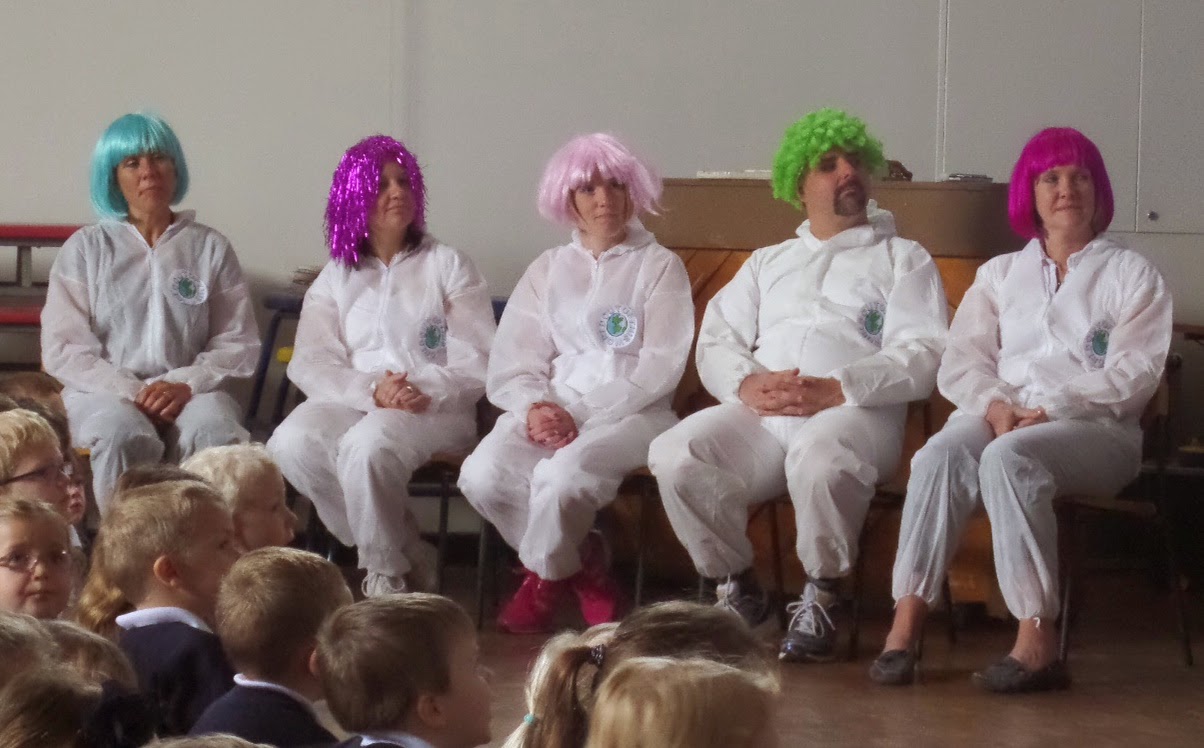
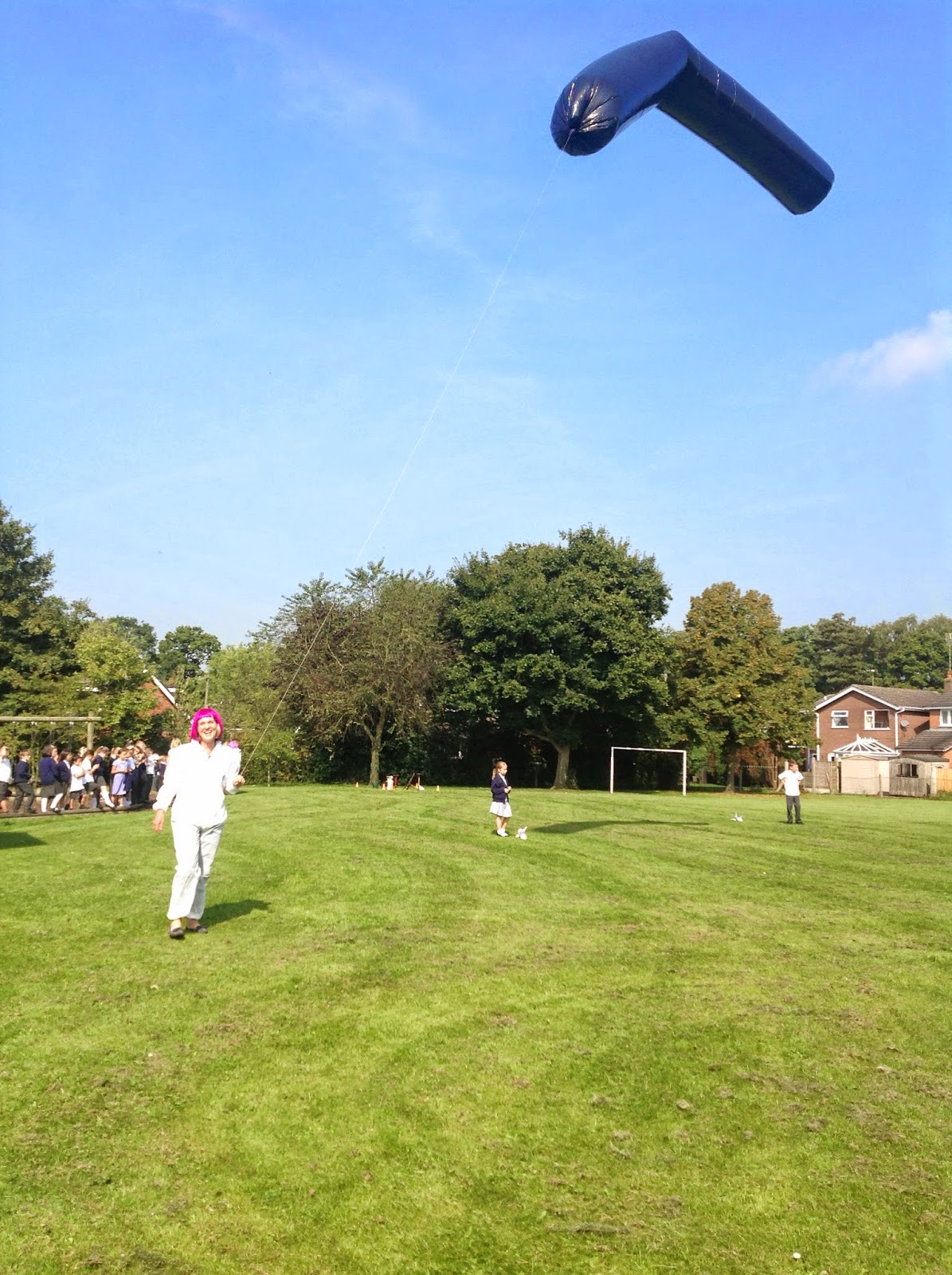
At 9:20, Team ‘Out of This World’ donned their white overalls and selected an appropriate wig. Many thanks to Mrs Pheasey for mine, which looked spectacular.

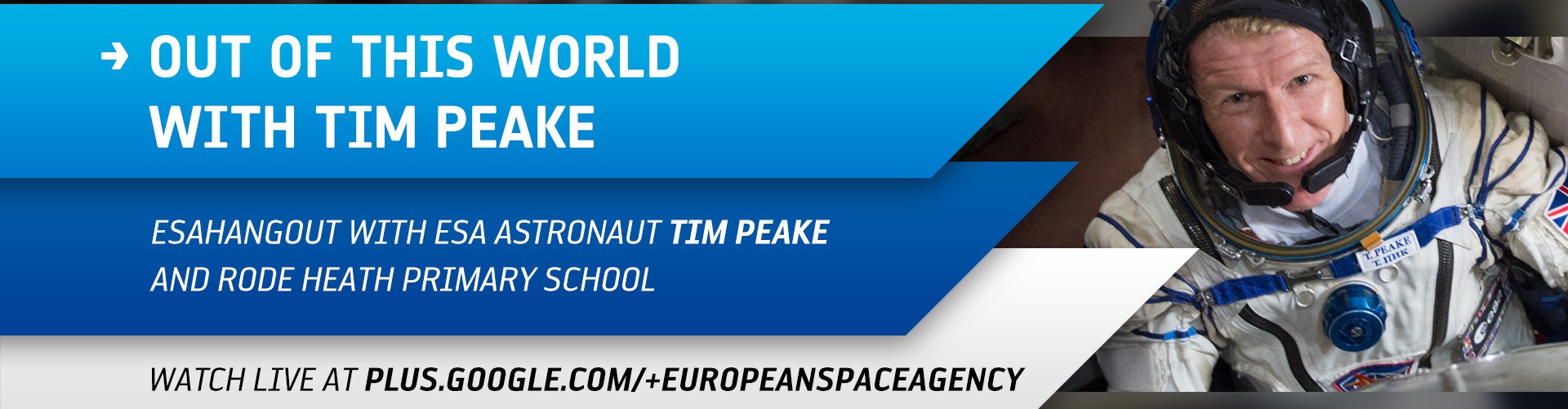
The following assembly was fabulous. We started with a message from Tim Peake, followed by a letter and then Mr Randall floated in with 2001 A Space Odyssey playing in the background. I must say he did a brilliant job – it’s very hot inside that suit and it was definitely made for a very small Russian!

Once he had leapt onto the stage and waved to the ecstatic crowd, I tried to indicate that he could leave and change out of the suit. Unfortunately, once encased inside, it apparently becomes impossible to hear anything, so it was a while before he realised what I was suggesting – either that or he was overcome by the moment!

Next, to the delight of the children, it was time to launch the pop bottle rocket across the hall. And, it didn’t disappoint. Although over in a couple of seconds, it certainly added a sense of drama to the occasion.

The rest of the day was spent in making and firing rockets. We learned about Newton’s third law of motion along the way and Ms Sinclair even taught her class about air resistance before embarking on her rocket making journey – excellent.

The competition was eventually won by the Year 3s, who sent their rocket a staggering 63m. Spending so much time in that spacesuit has obviously given Mr Randall special powers.

Many thanks should also be given to Wendy Cotterill, from Daresbury Laboratory, who came in and fired cardboard rockets with the Year 1 and Reception class.

All in all a fantastic day, the highlight of which was perhaps Tim Peake retweeting a photograph to all his 31,000 followers. It doesn’t get much better . . .